
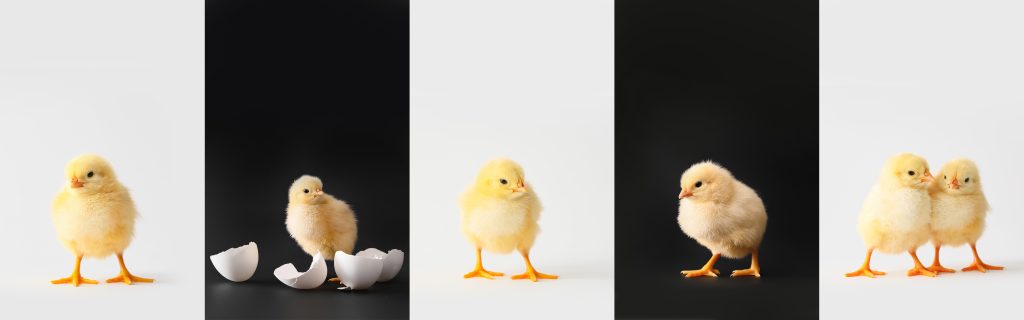
Raising chicks is one of the most rewarding parts of farm life — and one of the most important to get right. The first few weeks set the foundation for long-term health, temperament, and productivity. Here is what you need to know to give your chicks the best possible start.
The Brooder: Their First Home
Before your chicks arrive, have your brooder set up and at temperature. A brooder is a warm, enclosed space — a cardboard box, plastic tote, or purpose-built enclosure with a heat source — that mimics the warmth of a mother hen. Chicks cannot regulate their own body temperature for the first few weeks of life. Without consistent warmth, they will become stressed and can die quickly.
Temperature Guide
Week 1: 95°F Week 2: 90°F Week 3: 85°F Week 4: 80°F Week 5+: Reduce by 5°F each week until ambient outdoor temp.
Watch the chicks, not just the thermometer. Huddle under heat = cold. Scatter to edges and pant = too hot. Comfortable chicks move freely and cheep softly.
Heat Sources
We recommend a radiant heat plate over a heat lamp — safer, more efficient, and better mimics a mother hen. If you use a heat lamp, use a red bulb, secure the fixture so it cannot fall, and never leave unattended.
Feed, Water & Bedding
Feed
Chicks need chick starter feed — a high-protein (18–20%) crumble. Do not substitute adult layer feed: the calcium levels are too high and can cause kidney damage. We use non-GMO starter. If you offer greens or treats, always provide chick-sized grit alongside them.
Water
Fresh water at all times from the moment chicks arrive. For the first 24–48 hours, add 1 tablespoon of raw apple cider vinegar per quart to support gut health. Use a shallow waterer — chicks can drown in deep containers. Check and refill twice daily.
Bedding
Use pine shavings — not cedar (toxic oils). Avoid newspaper in week one (too slippery, causes spraddle leg). Keep 2–3 inches deep; change when damp. Clean, dry bedding is the single biggest factor in preventing respiratory illness.
Moving Outside & Warning Signs
Transitioning to the Coop
Chicks are ready to move outside when fully feathered — typically 6–8 weeks depending on breed and season. Don’t rush it. For the first few days in the coop, keep them locked inside so they learn it is home. Then begin supervised ranging, locking them in at dusk.
Warning Signs
- Pasty butt — droppings stuck to the vent. Clean gently with warm water. Fatal if untreated. Check every chick daily for the first week.
- Spraddle leg — legs splayed outward from slippery flooring. Treat early with a small bandage hobble; usually resolves in 24–48 hours.
- Lethargy or hunching — a chick standing still with eyes closed is sick. Isolate immediately.
- Sneezing or labored breathing — check ventilation, bedding moisture, and temp. Spreads fast.
- Runny or bloody droppings — watery or blood-tinged droppings are not normal. Consult a vet.
Our Standard at Tournesol Farms
Every chick that leaves our farm is sold with a care conversation — not just a receipt. If you purchased chicks from us and have questions, reach out: liz.toussaint@tournesolfarm.com